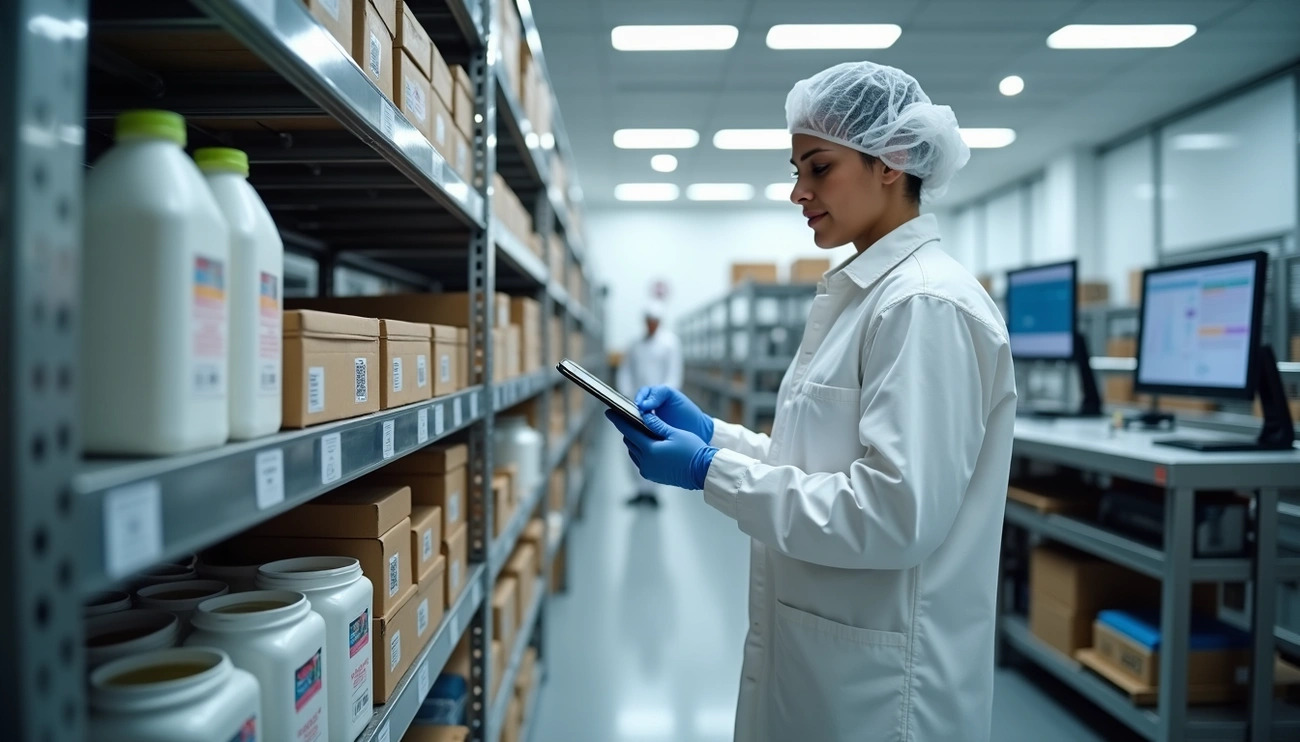
Food recalls can get pricey and destroy brand trust overnight. Manufacturing companies now use traceability software that helps them locate contaminated products within minutes rather than days.
The food industry needs strong traceability software, especially when you have automated systems cutting foodborne illness outbreaks by half. This software helps manufacturers handle recalls quickly and accurately, so they only remove affected products from the market. The FSMA 204(d) Final Rule now makes it urgent for businesses dealing with Food Traceability List items. About 1.5 million businesses worldwide rely on GS1 standards to track their products.
Traceability serves as the foundation of food safety in today's global supply chain. This piece shows how food traceability software helps cut costs through waste reduction, lower recall expenses, automated manual tasks, easier compliance, and a more efficient supply chain.
How Traceability Software Reduces Food Waste and Spoilage
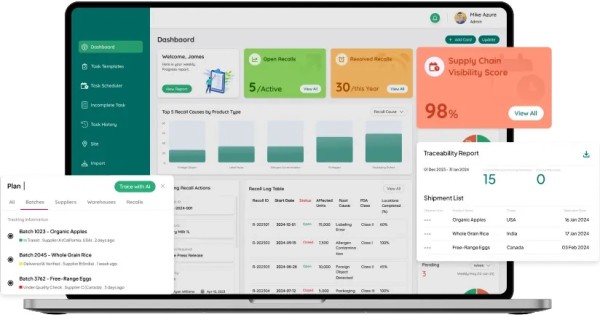
Image Source: Folio3 FoodTech Food manufacturers lose 5-15% of their kitchen food purchases to waste. Food traceability software helps tackle this expensive problem with three powerful ways that cut down spoilage and waste.
Up-to-the-minute inventory tracking stops overproduction
Latest data shows that overproduction makes up 51% of foodservice waste, making it the biggest source of food waste in most kitchens. Food traceability software prevents waste by giving you a clear view of inventory levels in all locations.
Modern traceability systems track every lot movement digitally from the moment it arrives until it ships out. This constant monitoring lets manufacturers:
- Plan production accurately using past data
- Act on inventory changes right away
- Know which items move fast or slow to buy smarter
- Find where and why they lose food to fix problems
The software helps plan production based on what customers actually need. So, manufacturers can cut waste while keeping enough stock to serve their customers.
First-expiry-first-out (FEFO) rules in storage
Traditional FIFO methods use arrival time to decide what moves first. But traceability software makes FEFO warehouse management possible. This way, products close to expiring move out first, whatever their arrival date.
Modern systems make sure FEFO happens during picking—moving stock with earliest expiry dates first. Each batch has its lot number, manufacture date, shelf-life, and expiry date. The system figures out how much life is left automatically.
On top of that, smart warehouse systems use barcodes and automation to apply FEFO rules. These systems keep track of when things expire and guide workers to fill orders the right way. This quick movement of inventory means less food goes bad.
Automatic warnings for food about to expire
The software's best feature might be its customizable alerts for aging materials. You can set specific time warnings (usually 90, 60, and 30 days before expiry). These pop up on planners' screens, mobile scanners, or come as emails/texts.
These instant alerts help staff:
- Use ingredients that expire soon
- Create promotions to sell products faster
- Start rework processes when possible
- Send items back to suppliers if they can
Staff can scan any product and see how long it will last. Getting these alerts early makes a big difference - nobody wants to hear about expiring food the day before it goes bad.
This software has shown it can cut food purchases by 2-6% by reducing waste. Manufacturers now turn inventory faster, have better cash flow, and make better products—while helping the environment too.
Lowering Recall Costs with Faster Traceability
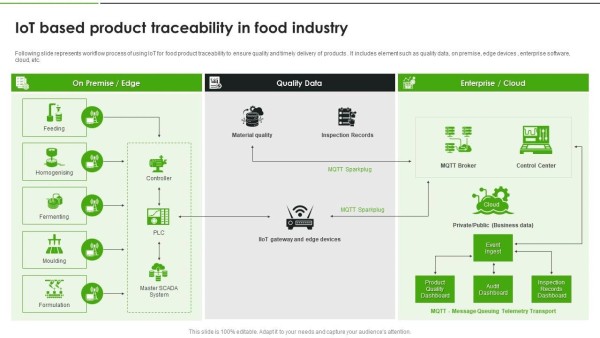
Image Source: SlideTeam
Food manufacturers spend about $10 million in direct expenses for the average recall. They lose even more money from reduced sales, legal costs, and damage to their brand. Food manufacturing traceability software cuts these costs by a lot. It helps companies respond faster and target recalls more precisely.
Bi-directional lot tracking for rapid recall execution
Today's traceability software lets manufacturers track products in two directions at once. They can trace items forward to customers and backward to suppliers. Food safety experts call this dual visibility a "product genealogy" because it shows the complete history of every ingredient.
Bi-directional lot tracking helps you:
- Find exactly which customers got affected products
- Track all raw materials used in a compromised batch
- See which other finished goods might have the same affected ingredients
- Find contamination sources accurately
Modern traceability software has replaced old paper-based systems with digital solutions. The system tracks every component through barcode scanners or RFID tags. This automated approach removes manual entry errors that often slow down recalls.
Mock recall drills and automated recall letters
The FDA wants food manufacturers to run regular mock recalls to test how well they can respond. These practice runs help find weak spots in your process before real emergencies happen.
Your team can use traceability software during mock recalls to:
- Check response times against industry standards
- Test how well departments communicate
- See how quickly you can find and isolate problem products
- Show proof that your traceability system works
The software can create recall letters automatically. You can merge these with Microsoft Outlook or similar email systems. This means you can send official customer notifications within one minute. Having proof that you told customers quickly can be vital during regulatory investigations.
Reducing recall scope with shift-level lot tracking
Food traceability software saves money by letting you track lots more carefully. Many plants only change lot numbers once per day. This means they must recall an entire day's products when problems occur. Shift-level tracking changes this by letting you focus on specific production runs.
Here's an example: Daily lot tracking means recalling everything made that day if contamination happens. But shift-level tracking lets you recall only products from the problem shift. This could cut your recall size by two-thirds if you run three shifts.
The International Trade Center reports that companies using traceability technology can reduce recalls by 50-95%. This is a big deal as it means that the median cost of $8.2 million for broad recalls can be avoided. Some recalls have cost producers up to $72.7 million.
Traceability software helps food companies turn broad, expensive recalls into focused, manageable events. This protects both their finances and their customers.
Reducing Labor Costs Through Automation
Food manufacturers spend up to 70% of their operating expenses on labor costs. The right traceability software offers several ways to cut these expenses by automating tasks that staff used to do manually.
Digital forms replacing manual logs
Paper documentation creates hidden costs that add up quickly in food manufacturing. Staff members spend 3-4 hours every week on paperwork, and businesses pay thousands each year just to maintain paper-based food safety plans. Food traceability software comes with customizable digital forms that replace old paper logs used for critical control points, sanitation, receiving inspections, and quality checks.
The advantages go beyond just making things easier:
- Staff paperwork and administrative tasks drop by up to 70%
- No more lost or unreadable records that plague manual systems
- Smart forms show only the fields you need based on your answers
- Built-in checks make sure nothing gets missed
A food manufacturer's safety team found they could focus on real safety issues instead of "writing their lives away" after switching to digital forms. The team now spends time on tasks that matter rather than pushing paper.
Automated compliance documentation for audits
The right software turns weeks of audit prep into just a few days. Digital systems keep all documentation organized and available for inspectors. This matters because digital food safety monitoring now fits regulatory compliance requirements in major jurisdictions.
These systems make audit-ready reports by providing:
- Quick access to past records
- Instant alerts about compliance problems
- Document version tracking
- Secure online portals for remote auditor reviews
Food manufacturing traceability software creates one central place where inspectors quickly find what they need without digging through binders. This quick access saves countless hours of audit preparation time.
Mobile data capture on the production floor
Staff can now log data right where they work using mobile-enabled food traceability software. This changes how manufacturers collect vital information throughout their facilities. Teams can use these mobile apps on almost any device to replace paper processes with clear digital instructions.
Real-world uses include:
- Recording sanitation logs on tablets
- Getting product details instantly by scanning barcodes
- Doing inspections offline and syncing later
- Printing custom barcoded labels from mobile devices wirelessly
A brewery president noted that "an automated solution can replace the labor of three men" in some operations. Some food manufacturers have cut their assets by 70% while keeping production steady by improving inventory management.
Cutting Compliance Costs with Built-in Regulatory Tools
Food producers spend thousands of dollars each year on documentation to meet regulatory compliance. Manufacturing traceability software reduces these costs with built-in tools designed for food safety regulations.
FSMA 204 and HACCP-ready templates
Modern food traceability software has pre-configured templates that match FDA requirements, specifically FSMA 204 compliance which requires strong record-keeping to track certain foods. These systems capture Key Data Elements (KDEs) at Critical Tracking Events (CTEs) throughout your supply chain.
Food manufacturing traceability software offers:
- Ready-to-use templates to create detailed HACCP plans
- Machine learning capabilities that learn from previous users' data to become more precise
- Digital tools that turn regulatory mandates into enforced shop-floor steps
Users can create complete HACCP plans in under an hour—a task that usually takes weeks. One user shared they "started AND finished" their HACCP plan during a 45-minute wait, which drastically cut down compliance preparation time.
Audit-ready reporting and version control
Version control failures can lead to serious risks in food manufacturing. Products might become inconsistent, fail quality standards, or pose health risks to consumers. Traceability software for food manufacturing solves this through:
- Tamper-evident electronic batch records with timestamps, signatures, and attachments
- Automated audit trails that log every user action and system change
- Centralized dashboards that store all compliance data and reports in one secure location
These systems automatically generate reports that document every incident, including timing, affected assets, and corrective actions taken. Reports get scheduled and emailed automatically, so you stay informed without extra manual work.
Supplier document automation and approval workflows
Supplier document management software simplifies handling of critical documents like contracts, certificates of analysis, compliance certificates, and allergen information. The software provides an audit-ready repository with version control and audit trails. It also sends automatic document requests and expiration alerts.
Your dashboard shows all missing, expiring, and expired supplier documents instantly. Automated workflows for supplier compliance help products reach market faster while maintaining full regulatory compliance.
We improved kitchen efficiency by 25x in food safety task completion with these automated systems. This saves about $23,738 annually. The administrative burden ended up becoming a simplified process that supports both compliance and cost reduction.
Improving Supply Chain Efficiency and Reducing Procurement Costs
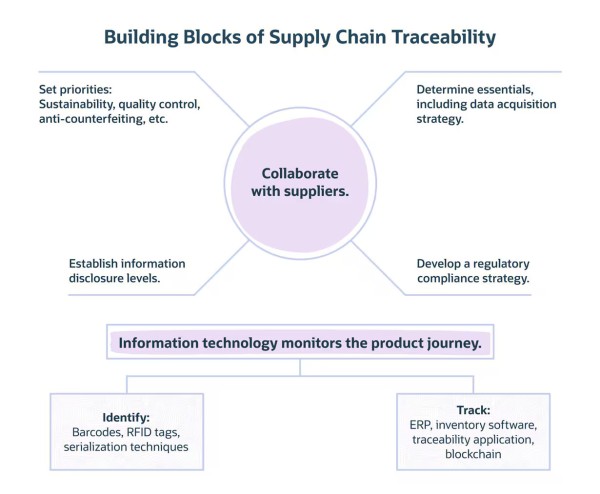
Image Source: NetSuite
Manufacturers can track their products' exact location at any time with supply chain visibility. This knowledge helps them make quick decisions about production and distribution. Food manufacturers can save money throughout their procurement process by using traceability software that optimizes this visibility.
Supplier performance tracking and integration
Manufacturing traceability software helps monitor and evaluate how suppliers perform. This evaluation helps maintain quality standards and makes operations run smoothly. The platforms offer these key features:
- Digital dashboards that show important supplier metrics as they happen
- Online feedback and rating systems for fair evaluation
- Automated performance forms that make reviews easier
The best results come from treating suppliers as partners instead of just vendors. This approach encourages open communication through shared platforms. The software also makes supplier document management easier. It handles contracts, analysis certificates, and allergen information with scheduled requests and alerts for expiring documents.
Ingredient traceability from source to distribution
Food industry traceability solutions create complete transparency by tracking materials from start to finish. Manufacturers get a detailed record that shows they follow all regulations.
These systems can track both lots and individual items from raw materials to finished products. Manufacturers can map their supplier networks and get accurate views when suppliers add their data. The tracking data helps create real connections between different parts of the chain. Companies can see supplier relationships on interactive maps and spot high-risk suppliers or areas.
Avoiding duplicate orders with centralized visibility
Duplicate orders can seriously hurt manufacturing profits. Food traceability software stops this issue by showing all ordering channels in one place—EDI, telephone, fax, and email. Different departments from the same customer might place orders through various channels without proper controls. The system records each as a new order.
The right software finds and eliminates duplicate orders with minimal human input. It uses specific rules to spot potential duplicates. This central view of all purchases helps maintain customer trust and protect profits by preventing unnecessary processing.
Conclusion
Food traceability software cuts costs in many operational areas. This piece shows how these systems deliver measurable financial benefits through waste reduction, targeted recalls, simplified processes, compliance, and better supply chain management. Companies that use detailed traceability solutions report 40% lower costs compared to manual systems.
The advantages go beyond just saving money. Quick responses to food safety concerns protect consumers and your brand's reputation. The precision of these systems helps meet regulations while removing the paperwork burden that usually comes with food safety documentation.
Up-to-the-minute inventory tracking and automated expiry management change how companies handle perishable goods. Your team can make evidence-based decisions instead of relying on guesswork or old data. The operation becomes more agile, responsive, and profitable.
The software keeps evolving as regulations get stricter. FSMA 204 compliance shows how traceability software adapts to new industry needs. You can see these benefits firsthand by requesting a demo of our V5 Traceability Software. It will help your manufacturing operation cut costs while improving food safety protocols.
Food traceability software is a crucial investment for manufacturers who want to stay competitive today. The question isn't whether you can afford these systems - it's whether you can afford to go without them.
Key Takeaways
Food manufacturers are discovering that traceability software delivers substantial cost savings while strengthening food safety protocols. Here are the most impactful ways this technology transforms operations:
• Waste reduction drives immediate savings: Real-time inventory tracking and automated expiry alerts cut food waste by 2-6%, preventing overproduction that accounts for 51% of foodservice waste.
• Precise recalls minimize financial damage: Bi-directional lot tracking reduces recall scope by 50-95%, potentially saving millions compared to broad recalls that average $10 million in costs.
• Automation slashes labor expenses: Digital forms and mobile data capture reduce paperwork burden by 70%, allowing staff to focus on value-adding activities instead of manual documentation.
• Built-in compliance tools eliminate overhead: FSMA 204-ready templates and automated audit reporting cut compliance preparation from weeks to days, saving approximately $23,738 annually per facility.
• Supply chain visibility prevents costly errors: Centralized procurement tracking eliminates duplicate orders and optimizes supplier performance, creating end-to-end transparency from raw materials to distribution.
The combination of these benefits enables manufacturers to achieve up to 40% cost reductions while maintaining superior food safety standards—making traceability software an essential investment rather than an optional upgrade.
FAQs
Q1. How does traceability software help reduce food waste in manufacturing? Traceability software reduces food waste through real-time inventory tracking, first-expiry-first-out (FEFO) enforcement, and automated alerts for nearing expiry materials. This can cut food purchases by 2-6% and significantly improve inventory turnover.
Q2. What impact can traceability software have on recall costs? Traceability software can reduce recall costs dramatically by enabling bi-directional lot tracking, automating recall letters, and implementing shift-level lot tracking. This precision can reduce recall scope by 50-95%, potentially saving millions compared to broad recalls.
Q3. How does traceability software automate compliance processes? Traceability software automates compliance through built-in regulatory tools like FSMA 204 and HACCP-ready templates, audit-ready reporting with version control, and supplier document automation. This can reduce compliance preparation time from weeks to hours.
Q4. In what ways does traceability software improve supply chain efficiency? Traceability software enhances supply chain efficiency by enabling supplier performance tracking, providing end-to-end ingredient traceability, and offering centralized visibility to avoid duplicate orders. This creates comprehensive transparency from raw materials to distribution.
Q5. What are the overall cost savings that food manufacturers can expect from implementing traceability software? Food manufacturers implementing comprehensive traceability solutions report cost reductions of up to 40% compared to traditional manual systems. These savings come from reduced waste, lower recall costs, streamlined labor requirements, simplified compliance, and enhanced supply chain management.
SG Systems Global helps food manufacturers:
- Reduce recall costs with real-time batch traceability
- Automate Certificate of Analysis (CoA) generation
- Ensure FSMA 204 compliance
- Improve supply chain visibility